
How to Check Criminal History in Greenbrier
Greenbrier records do not sit in one database. Begin with the office that made the record, then follow the event into county and state systems only when its path calls for that step. A report request needs enough detail to locate an existing item. A court request works best with a citation or case number and date.
- Ask Greenbrier Police or the city custodian for the incident, crash, arrest, or citation record.
- Give the incident number, date, location, names, and a clear inspection or copy choice.
- Contact Greenbrier Municipal Court for a city ordinance or citation file.
- Call the Robertson County jail and court clerks for a custodial arrest or state charge.
- Use TORIS only when a broader Tennessee fingerprint-reported history is needed.
Greenbrier Police Records Start at City Hall
Greenbrier Police and City Hall share the practical local starting point at 790 West College Street. The city main line is 615-643-4531. No stable official report-request form or public name portal was verified in the research, so call first and ask how the custodian currently accepts a precise Tennessee Public Records Act request. State whether inspection or copies are wanted and ask for an estimate before paid work begins.
The official MTAS Greenbrier profile supplies the state-certified city facts used to identify this jurisdiction.
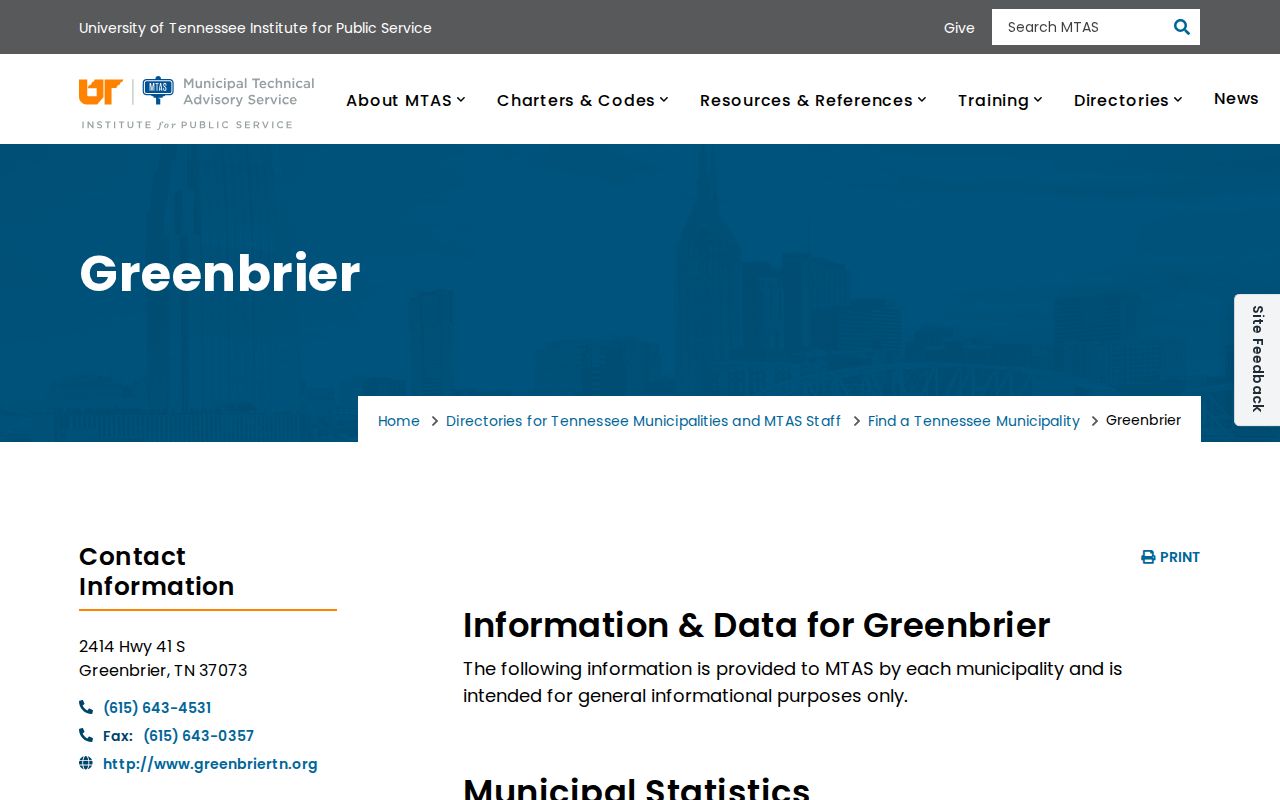
The profile confirms Greenbrier as an incorporated Robertson County city, which is the key reason its police and municipal records are separate from sheriff records.
MTAS also lists weekday municipal hours from 8 a.m. to 4 p.m. Treat those as a planning aid, then confirm that the Greenbrier records contact will be present and that the requested file is held on site. A city hall counter may route police material differently from municipal court material even when both Greenbrier offices use the same civic address.
Greenbrier Police Department Records
Greenbrier Police creates reports for incidents its officers handle within city jurisdiction. Those can include offense narratives, arrest information, crashes, citations, property or evidence references, and basic dispatch details. The police report explains the investigation. It does not contain the final state-court disposition just because charges later arose.
Ask for a defined record, not a request that the city compile every fact about a person. Useful keys include the incident or citation number, date and time, precise place, involved party, and officer when known. Also provide contact details, Tennessee citizenship proof if requested, delivery preference, and a cost limit. Active investigative content, victim or minor details, and other confidential fields may be withheld or redacted.
A request for 911 audio, computer-aided dispatch data, or body-camera footage should use a tight time span and exact location. Those files can require more review and redaction than a paper incident report. Ask Greenbrier which office holds the medium, how inspection works, and whether labor or media charges will apply. The city need only provide an existing record; it does not have to create a new narrative or answer an open-ended research question.
When Greenbrier Police Is Not the Custodian
A Greenbrier mailing address does not prove that Greenbrier Police handled an event. If the site was outside city limits, a Robertson County sheriff's deputy or another agency may own the report. Check the citation, incident number, booking entry, or officer information before sending a request. When two agencies responded, ask each for the records it created rather than expecting one office to hold the full file.
The sheriff's Records Division is at 507 South Brown Street in Springfield, 615-384-7971. Greenbrier remains the custodian for its police narrative, while the Robertson Circuit or General Sessions clerk keeps the prosecution docket. This split is normal record ownership, not a missing file.
Greenbrier Arrests and Bookings
A Greenbrier custodial arrest normally moves to Robertson County Detention Facility at 311 Fifth Avenue East in Springfield. The jail can be reached at 615-384-7974. It creates the booking number and time, intake identity data, photograph and fingerprints, initial charges, holds, bond data, custody status, and release entry. Medical screening and security classification do not become ordinary public fields.
That booking remains different from the Greenbrier officer's report and the court file. If the website's Inmate Info route does not load, call the jail. TN SAVIN/VINE at 1-888-868-4631 can provide custody notifications. For the path from intake to the later judgment, use the county's Robertson County arrest history channels.
TN SAVIN can search by offender name or booking number and can send notice of release, transfer, or escape. Registration may be anonymous and uses a four-digit PIN. It supports several contact numbers and live language help, but its own warning says not to depend on the service as the sole safety plan. For a Greenbrier arrest that is too recent to appear, confirm custody by phone.
Greenbrier Report Versus Robertson Booking
These records overlap, but their jobs differ. A Greenbrier police report is event-centered. It can state what was reported, what an officer observed, and the probable-cause basis for an arrest. The Robertson booking file is custody-centered. It records intake, initial charges, bond or holds, and release. The General Sessions or Circuit docket is case-centered and shows what prosecutors and judges did next.
| Record | Custodian | Best use |
|---|---|---|
| Incident or arrest report | Greenbrier Police | Event narrative and officer action |
| Booking file | Robertson County Detention Facility | Custody, bond, holds, and release |
| Criminal docket | Robertson court clerk | Filed charges, plea, result, and sentence |
Greenbrier Municipal Court Records
Greenbrier Municipal Court handles city ordinance and citation matters. It is not the Robertson felony trial court, and no verified public name-search portal was found. Contact the municipal clerk through City Hall with the citation number, name, and date. Ask what can be inspected and what current copy charge applies before ordering a certified document.
The city's official Municipal Court page is the source to confirm current operations.
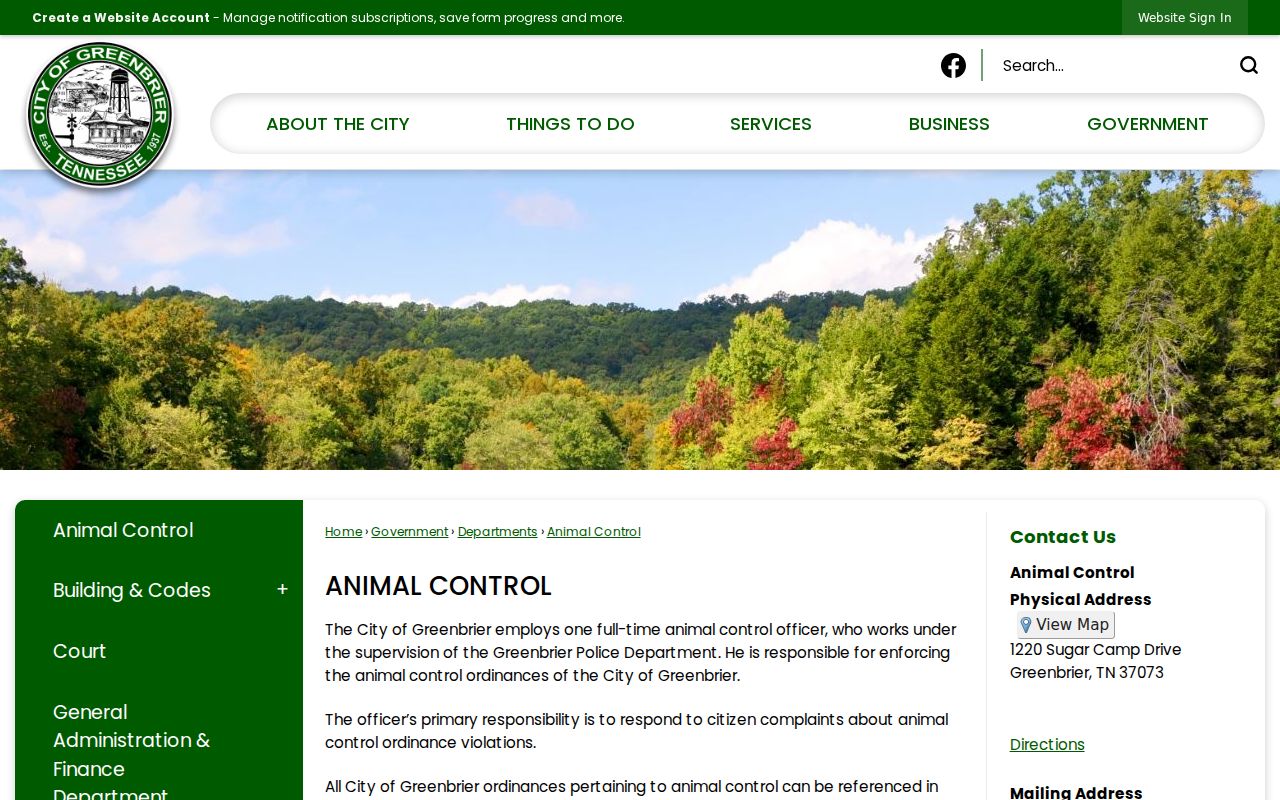
The court page helps route a city citation, while state misdemeanors and felony preliminary matters belong at Robertson County General Sessions.
| Court name | Greenbrier Municipal Court |
|---|---|
| Case types | City ordinance and citation matters within municipal jurisdiction |
| Lookup channel | Clerk phone or counter; no verified public name portal |
| Useful keys | Citation number, full name, event date, and ordinance reference |
| Copies and fees | Confirm current availability and charge with the clerk |
Greenbrier Citation or State Charge
A municipal violation does not automatically equal a Tennessee misdemeanor conviction. Read the charging authority. A Greenbrier code citation points to city jurisdiction, while a Tennessee Code Annotated offense can move through General Sessions and, for an indicted felony, Circuit Court. The same incident may produce both a police report and more than one legal record.
- Municipal citation
- An allegation under the Greenbrier code heard in the city court.
- Complaint
- A sworn charge that often begins a Robertson General Sessions case.
- Indictment
- The grand jury's formal felony accusation filed in Circuit Court.
- Disposition
- The outcome of a charge, such as conviction, dismissal, or acquittal.
Where Greenbrier Records End Up
When Greenbrier Police makes a reportable arrest, booking staff take fingerprints and create the county custody record. The state prosecution begins in Robertson General Sessions and may move to a grand jury and Circuit Court. The clerk later reports a disposition for linkage to the Tennessee Bureau of Investigation's central history.
Record flow: Greenbrier Police › Robertson County Courts › Tennessee Bureau of Investigation.
Timing explains many conflicts. Initial charges can be changed, dismissed, no-billed, or replaced by indictment. A statewide TORIS result can also lag when a disposition is late or cannot link to the fingerprint cycle. The certified Robertson judgment is the best proof of the outcome.
TORIS costs $29 and searches Tennessee fingerprint-reported misdemeanor and felony arrests by the submitted name and demographics. It does not match aliases and is not a fingerprint identity check. That makes it a broad state layer, not the first place to resolve one Greenbrier event. Use the local report and court case number to test a match, then obtain the certified disposition if the final outcome matters.
Greenbrier's 1937 Records Context
Greenbrier was incorporated on December 1, 1937. MTAS lists a 2025 state-certified population of 6,898, about 40 municipal employees, weekday City Hall hours from 8 a.m. to 4 p.m., and a first-Monday governing meeting. Those facts describe a small city system in which phone and counter requests remain important.
Older state criminal proceedings may not sit with the city at all. Robertson County Archives indexes Criminal Court Papers from 1900 through 2016, General Sessions material beginning in 1947, and testimony transcriptions reaching back to 1932. An online index hit can point to a paper file, but it does not promise a digitized document.
The city profile also points readers toward Greenbrier's current municipal code, which has separate titles for Municipal Court and Law Enforcement. Those titles help identify whether a cited provision belongs to city government. They do not expand the municipal court into a felony court. For a state offense, follow the Robertson County clerk path even when a Greenbrier officer issued the first paper.
No Greenbrier Online Case Result
A failed web search does not prove no Greenbrier record exists. First call the municipal clerk if the matter is a city citation. Next ask Robertson General Sessions about a state misdemeanor, warrant, or felony preliminary case. Check Circuit Court for an indictment, judgment, or later felony filing. For older years, search the county Archives and ask for the underlying paper.
Identity checks matter at each step. Use a case or citation number when possible. With a name request, add the event date or date range and confirm the match through case facts. Do not assume that two people with the same name share one Greenbrier criminal history.
If the Greenbrier clerk sends an older state matter to Robertson County Archives, record the court name, approximate year, and any case number before switching systems. The Archives offers Keyword, Name, and Field Search. Choose the relevant criminal record group, find the index pointer, and ask whether the underlying paper must be pulled. A catalog result alone is not the full Greenbrier case file.
Public Access Rules for Greenbrier Records
The Tennessee Public Records Act gives Tennessee citizens a right to inspect state and local public records, subject to exceptions. Greenbrier may ask for identification to verify citizenship. An inspection request need not be written, though a copy request may be required on a form. If prompt production is not practical, the custodian generally has seven business days to produce, deny with a legal basis, or give an estimated production time.
Key statutes:
Tenn. Code Ann. §10-7-503 establishes access and response rules for Tennessee citizens.
Tenn. Code Ann. §10-7-504 gathers confidentiality rules that can require redaction or withholding.
Tenn. Code Ann. §38-6-120 supports TBI dissemination of Tennessee criminal-history checks.
Inspection is ordinarily free. Copies and labor can cost money under the city's policy and the state schedule. Ask for a quote. Juvenile records, protected victim details, medical or security information, active investigative material, and expunged files may remain unavailable.
A narrow Greenbrier request is easier to process and easier to review. Identify one incident, citation, date span, or existing record series. State whether an electronic copy, paper copy, or inspection is preferred. If the city denies or redacts material, ask for the legal basis and keep the response with the request. That creates a clean trail without asking Greenbrier staff to compile a new report.